Casting across and beyond gender: how to do it well
By Roscoe · 27 June 2026 · 4 min read
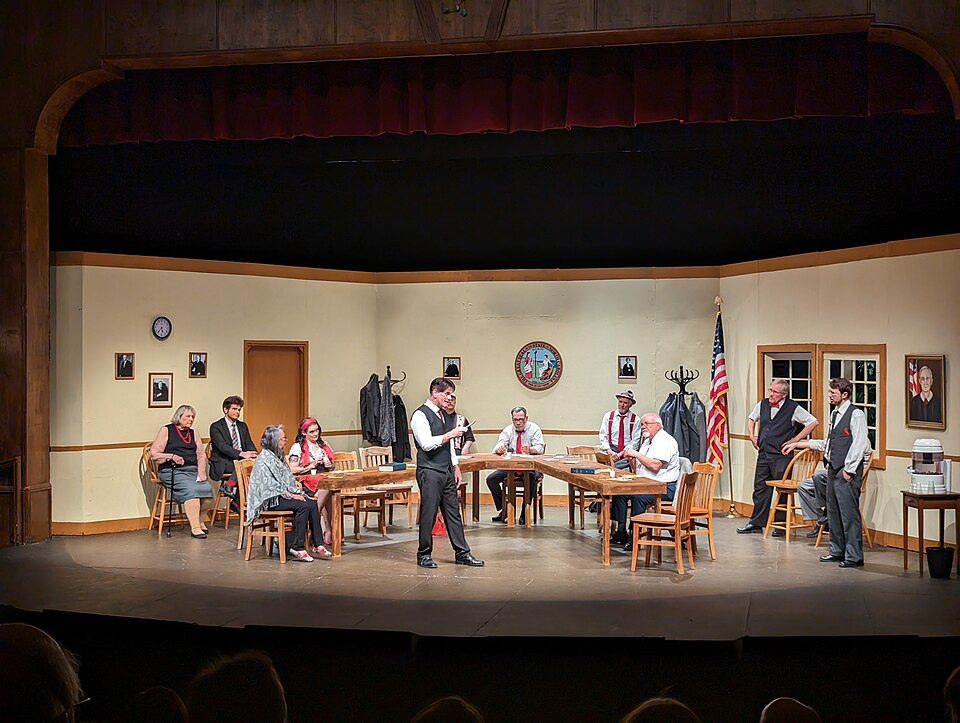
Community theatre has always cast more flexibly than the script literally dictates. Sometimes it's artistic — a director sees something fresh in reading a role against type. Far more often it's simple arithmetic: forty women and twelve men turn up to audition for a show written with the ratio reversed, and you cast the company you actually have. Either way, casting across and beyond gender is not some new frontier. It's ordinary practice, and the only real question is how to do it well rather than whether to do it at all.
So this is a practical guide, not a debate. If you're a director or a committee weighing it for an upcoming show, here's what actually matters.
First, two different things
It helps to separate two ideas that get lumped together.
Gender-blind casting means you don't factor an actor's gender into who plays a role — you cast the best person and let the role accommodate them. Cross-gender or gender-bent casting is a deliberate choice to play a specific role as, or by someone of, a different gender than written, usually because it says something interesting about the character or the show.
The first is mostly a fairness-and-opportunity decision. The second is an artistic one. Knowing which you're doing for a given role keeps you honest about why, which matters when someone asks.
Start with the licence — genuinely, start there
This is the step companies skip and then regret. If you're staging a licensed play or musical, your performance licence usually governs what you can and can't change — and that frequently includes character names, pronouns, and gender. Many licences prohibit altering the script in these ways without the rights holder's written permission, and for musicals, changing a vocal line's key to suit a different voice can be a separate permission again.
None of that means you can't do it. It means you ask first. A quick email to your licensor before you cast can be the difference between a clever idea and a breach that surfaces a week before opening. Sort the rights, then make the art.
Know why you're doing it for this show
"More people get to play" is a perfectly good reason. "It's a striking reading of the character" is a perfectly good reason. "It's a bit different and might get attention" is not — novelty for its own sake tends to read as a gimmick, and audiences feel the difference between a choice that serves the story and one imposed on top of it. Be able to finish the sentence "we're casting this role this way because…" with something about the work.
Mind the practical mechanics
The art lives or dies on the unglamorous details:
- Vocal range, in musicals. A role written for one voice type may need transposing for another — which affects your MD, your band parts, and possibly your licence. Check it before you cast, not during tech.
- Costume and design. Bring your designer in early; a casting choice can ripple through the entire look of a character.
- The text itself. If pronouns or references need to change to make sense, that's back to the licence question. If they don't need to change, often the strongest choice is to leave them and let the performance carry it.
Bring the actor in as a collaborator
The single most important thing: the person in the role is a partner in the choice, not a prop for it. Talk to them. Ask how they want to approach it, what they're comfortable with, how they'd like it handled in rehearsal and in front of an audience. A casting choice made with an actor lands as a shared piece of storytelling. The same choice made about an actor — to make a point they didn't sign up to make — rarely ends well for anyone.
The real question
The question was never whether casting across gender is allowed; it's been part of this art form forever. The question is whether a given choice serves the show and the people making it. Sort your licence, know your reason, handle the craft, and treat the actor as a collaborator — do those four things, and you're not taking a risk. You're just directing well.
Prompter is free for grassroots community theatre.
Run your whole production from one place — and only pay if you choose to.
See what's included