Nobody joined a theatre company to do admin — which is exactly why it eats the committee
By Roscoe · 4 September 2026 · 6 min read
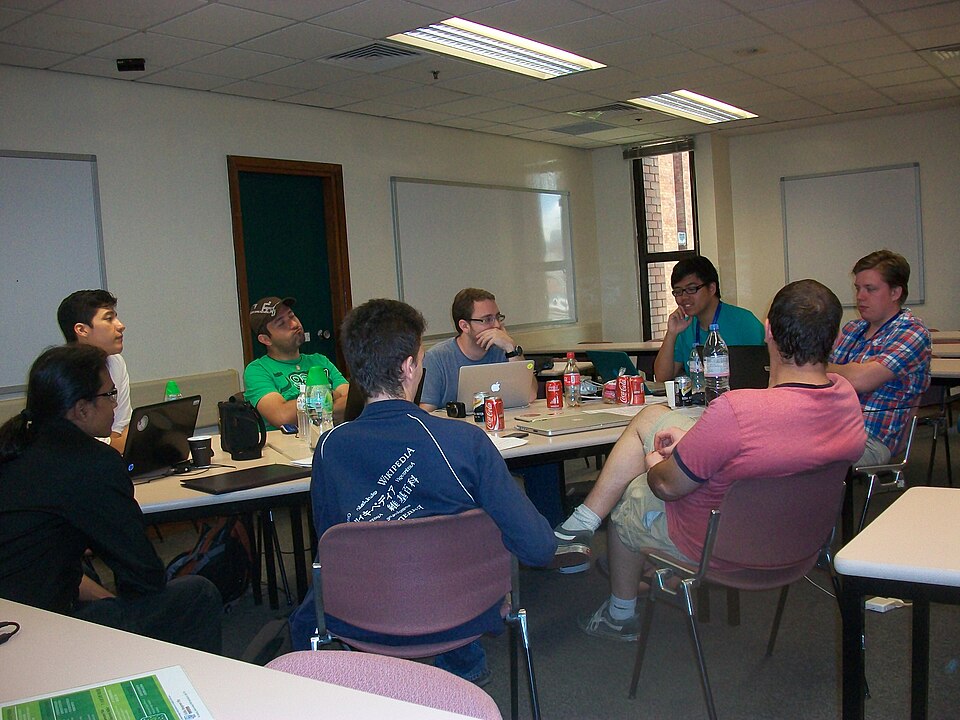
Go to any community theatre audition and count the room. Thirty people, maybe fifty, some of whom have driven an hour and taken an evening off work for a three-minute slot and no money.
Now go to the AGM and count that room.
Same company. Same season. Roughly a tenth of the people. And the ones who are there are, with grim reliability, the same five who were there last year, and the year before that.
We usually tell a story about this that flatters everybody: people are busy, committee work isn't for everyone, you can't expect volunteers to do more than they already do. I think that story is wrong, and I think it's costing companies their best people. The gap between those two rooms isn't a shortage of commitment. It's that one room is doing the thing everyone came for, and the other room is doing the thing nobody came for — and only one of those has ever been designed.
The constraint isn't money, and it isn't talent
Ask a committee what's holding the company back and you'll hear about money first. Not enough grants, venue hire went up again, royalties keep climbing, the sponsor didn't renew. Ask a second question and you'll hear about people: we can't find a musical director, we can't get anyone to stage manage, we can't get men to audition.
Both are real. Neither is the binding constraint, because both are things a company can survive a bad year of. Companies do a cheaper show. They co-opt a musical director from the next town. They cut the chorus. The season happens.
What actually stops companies is duller than either. A show requires several hundred hours of unpaid administration — the schedule, the contact list, the availability, the licence correspondence, the venue booking, the insurance renewal, the programme, the ticket reconciliation, the AGM paperwork, the funding acquittal — and every one of those hours has to come out of someone who signed up to make theatre. Not one person in that audition queue was there for the acquittal report. The work is mandatory and the motivation for it is zero, which is a combination no volunteer organisation handles well.
Unowned work doesn't disappear. It sinks.
Here's the mechanism, and it's the same in every company I've seen.
Admin arrives without a name on it. It isn't assigned, because assigning it would mean saying out loud that a specific person is now responsible for the boring thing — and in a room of friends, nobody wants to be the one who says that. So it sits there, and it flows downhill to whoever is least able to leave it undone.
That person is never chosen. They are selected by conscience. They're the one who can't sleep knowing the venue isn't confirmed, so they confirm it. Having confirmed it once, they are now the person who confirms it, permanently, by a process nobody ever ran.
And because the work was never named, it is never counted. It doesn't appear in the programme, in the minutes, in the budget, or in anyone's mental picture of what the company asks of its members. The committee genuinely does not know what it is asking, because the asking never happened. Someone just started doing it.
Then that person steps back, and the company discovers what they were carrying in the worst possible way — all at once, in production week, from a phone nobody else can unlock.
I've argued before that volunteers burn out from unclear work rather than from too much work. This is the sharpest version of it: admin is the least clear work in the building, and it is the work most likely to be done by the person least willing to drop it.
"We've always managed" is true, and it's the problem
The honest objection to all of this is that companies do manage. They've managed for eighty years, through committees and shoeboxes and now group chats, and the shows go on.
They do. I'd just point at the price, because it isn't on the P&L.
The price is your most reliable person leaving after a decade and taking the company's working memory with them. It's the show that got picked because it was easy to organise rather than because it was the right show. It's the funding round missed because the person who knew the deadline was busy being the person who knew everything else. It's a committee that meets for two hours and spends ninety minutes on logistics a shared document could have settled, then thirty minutes — at the end, when everyone is tired — on the season.
None of that shows up as a failure. It shows up as a company that's fine. Fine is expensive.
What I think companies should actually do
Three things, in order, and the first two cost nothing.
Name it, then count it. Write down the administrative jobs a season requires — genuinely all of them — and put a name against each. You will find jobs with no name, jobs with four names, and one name appearing eleven times. That list is the most useful document your company will produce this year, and it takes one meeting.
Stop treating each season as new. A season is the same shape every time: announce, licence, audition, cast, rehearse, publicise, sell, open, acquit. A company that rebuilds that from memory every year pays for the same thinking annually. A company that writes it down once pays for it once.
Get it out of one head. The single point of failure in most companies isn't a role — it's a phone. When the schedule, the contact list, the availability and the documents live somewhere the whole team can see, the person holding them is allowed to be unwell, be away, or hand over.
I should declare my interest plainly: I build Prompter, which exists to do that third thing, so read that paragraph knowing I am not a neutral party. The first two are free, and they are where the argument actually lives — no software fixes work that nobody has named.
The part I expect argument about
I don't think admin should be shared out evenly, and this is where I part company with most advice on the subject.
The instinct, when a load is unfair, is to spread it: everybody takes a turn, everybody does a bit. In my experience that produces work done badly by people who resent it, and it quietly punishes the competent — because when the turn-taking fails, it fails back onto the same conscientious person, who now looks like they're hoarding.
The better answer is the opposite. Concentrate the admin into a small number of clearly named roles, make those roles genuinely small by giving them decent tools, and then honour them the way you honour a lead. Print the name. Thank them from the stage. Treat "I keep this company running" as something a person can be proud of in public, rather than something they mention apologetically when asked why they're not auditioning this year.
A company that can't fill its committee doesn't have a volunteer problem. It has a job-design problem — and job design is something you are allowed to change.
Tell me I'm wrong.
Prompter is free for grassroots community theatre.
Run your whole production from one place — and only pay if you choose to.
See what's included