How to write a good funding application
By Roscoe · 15 October 2026 · 10 min read
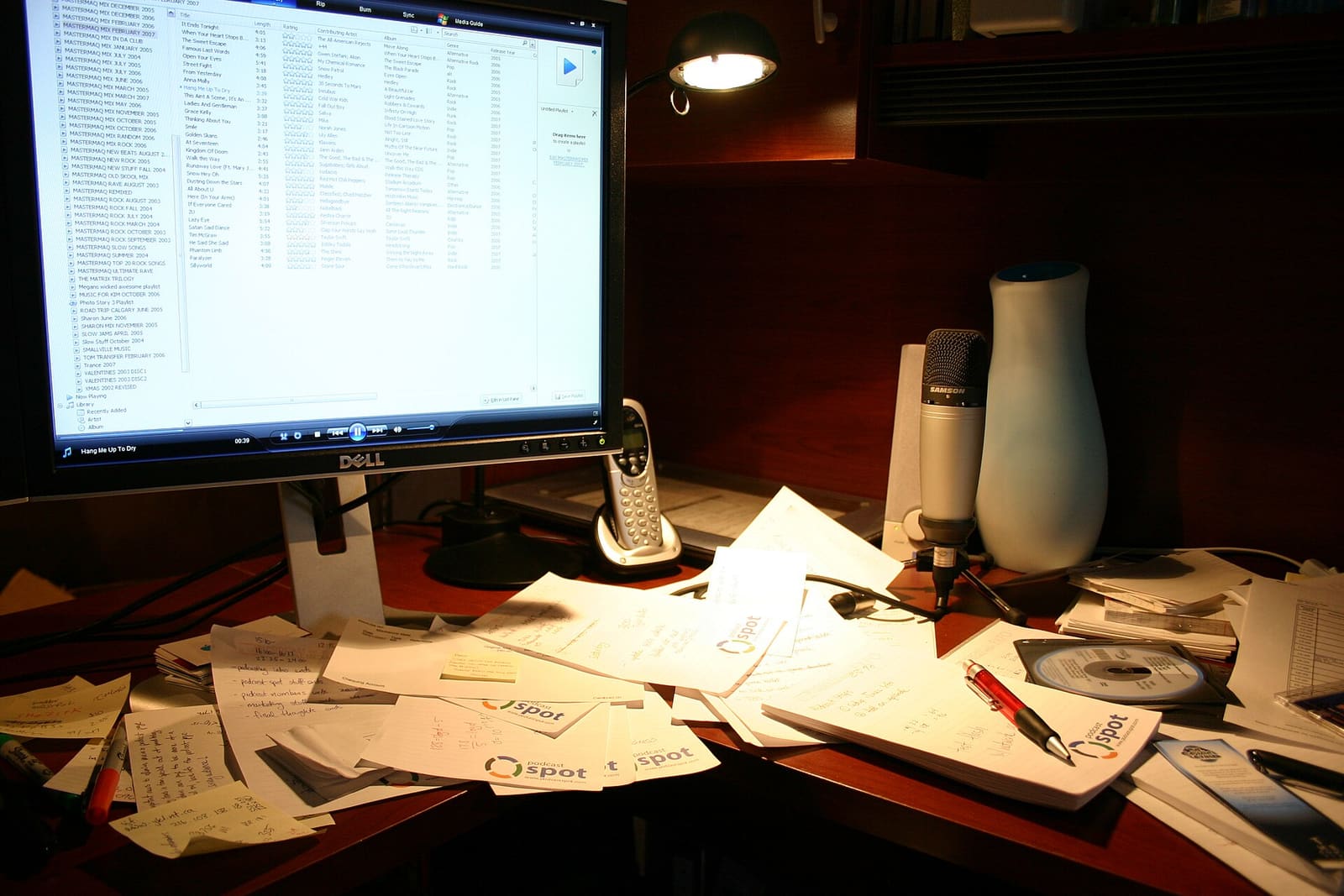
Here is how most community theatre funding applications get written. Someone on the committee notices the round closes on Friday. It's Tuesday. The person who wrote last year's application has moved on, and nobody can find the file. The treasurer is asked for "the accounts" and sends a spreadsheet that only makes sense to the treasurer. On Thursday night, one volunteer pastes the whole thing together, hits submit at 11:48pm, and hopes.
Sometimes that works. More often it doesn't — and the company concludes that funders don't fund theatre, or don't fund small theatre, or only fund people who know someone.
The truth is less mysterious and more useful. Funders publish what they look for, and the reasons they decline applications come up again and again across countries and funds. Most of them are things a volunteer committee can fix. This post walks through them.
First, understand who is reading
An assessor — or a panel of them — reads a lot of applications in one sitting. Many of them are good. There is not enough money for all the good ones. Some national arts funds run at success rates of only 15–20%.
So the job is not to impress the assessor. It's to make their job easy. A clear, specific application that answers the questions in the order they were asked is already ahead of a beautiful one that makes the reader hunt for the point.
Keep that picture in your head for everything below: a tired, fair person with a scoring sheet, trying to find the reasons to say yes.
Read the criteria before you write a word
The most common reason funders give for declining an application is not bad writing. It's that the project doesn't match what the fund is for. One large UK trust that published its decline data found that not sufficiently meeting its priorities topped the list.
Before anyone drafts anything, read the guidelines in full and answer three questions honestly:
- Are we eligible? Legal structure, location, size, what the fund will and won't pay for. Many funds won't pay for costs already covered elsewhere, for general running costs, or for things you've already bought.
- Does our project actually fit? If the fund is for reaching new audiences, a project that serves your existing audience is a stretch. Don't bend a project to fit a fund it doesn't match. Find a better fund.
- What exactly will they score? Most funders publish their criteria. Many group them under a few headings, such as the idea, whether you can deliver it, and how well it fits their priorities. Those headings are the skeleton of your application.
If the funder offers advisors, call one before you apply. Funders from arts councils to lottery boards say the same thing: talk to us early. A ten-minute conversation can tell you whether you're applying to the right fund at all.
Say what the money is for, in one sentence
If you can't say what you want the money for in one sentence, the assessor can't either.
"Support for our 2027 season" is not a project. "A sensory-friendly performance of our spring musical, with a trained relaxed-performance consultant and free tickets for 60 families through two local disability support groups" is a project. The assessor can picture it, cost it and judge it.
Write that sentence first. Put it at the top of the application. Then check every other answer against it — if a paragraph doesn't help the assessor believe that sentence, cut it.
Show the need, with evidence
Funders give money to make a difference to people. So say which people, and how you know they need this.
"There is a lack of arts opportunities in our area" is an assertion. Evidence is better:
- How many people came to your last three shows, and where they came from.
- How many people auditioned, and how many you had to turn away.
- What your audience or volunteers told you — a survey, even a short one, counts.
- A letter from a school, a community group or a venue that says, specifically, why this matters to them.
Small companies often think they have no evidence. Usually they have plenty — it's just scattered across ticket reports, email threads and someone's memory. More on that below.
Promise outcomes you can count
The second big reason applications fail is that they don't show clearly what difference the project will make, or how anyone will know.
"The project will build community and enrich lives" can't be checked. Outcomes an assessor can believe look like this:
- 600 audience members across six performances, including 60 families who have never attended.
- 12 young people trained in stage management, working alongside an experienced Production Secretary.
- Two workshops open to the public, with attendance recorded.
Then say how you'll measure each one: ticket data, sign-in sheets, a two-question survey on the way out. A funder who can see how you'll report back is a funder who trusts you'll deliver.
One more thing: be careful with one-off events. Funders often find it harder to see lasting impact in a single night. If the project leaves something behind — trained volunteers, a resource, a new relationship with a community group — say so.
Build a budget that adds up
Funders consistently name the budget as central to whether an application succeeds. A sloppy budget tells an assessor that the delivery will be sloppy too.
A good budget for a community theatre application:
- Costs every line. No "miscellaneous" and no "other". If it costs money, name it.
- Uses real numbers. Get quotes for anything significant — lighting hire, venue, a consultant — and attach them. Many funders require quotes above a set amount.
- Shows income as well as spending. Ticket sales, other grants, sponsorship, the company's own contribution. A funder wants to see they're one part of a plan, not the whole of it.
- Counts what volunteers give. Volunteer hours, donated rehearsal space and borrowed equipment are real contributions. Show them as in-kind support, in both the income and the spending columns so the budget still balances. Many funders set an hourly rate for volunteer time — use theirs.
- Asks for the gap. The amount you request should be exactly what's left once everything else is counted. Asking for the fund's maximum because it's there is easy to spot.
- Adds up. Check the totals. Then have someone else check them.
Prove you can deliver
An assessor is not only judging the idea. They're judging whether your company can pull it off. Funders regularly decline applications over doubts about financial health or track record.
You don't need to be big to look reliable. You need to look organised:
- Name who does what. Who leads the project, who handles the money, who reports back. A funder wants a name, not "the committee". (If your roles aren't written down, our post on position descriptions has a free pack to start from.)
- Show your governance. A constitution, a committee that meets, minutes, a treasurer who signs off the accounts. (More on running a committee that actually functions.)
- Show your track record. Past productions, audience numbers, previous grants you delivered and reported on.
- Attach your accounts. Most funders ask for the latest annual accounts. Have them ready and signed off before the round opens, not the night before it closes.
The records that make the next one easy
Look back at the sections above. Almost everything a funder asks for is something your company already had at some point: last season's audience numbers, the cast and crew list, the budget against actuals, the photos, the feedback, the minutes where the committee approved the project.
The hard part of an application is rarely the writing. It's the archaeology — digging those facts out of old inboxes, a former treasurer's laptop and a Facebook group that only scrolls one way.
So the most useful thing a committee can do for funding isn't to get better at writing. It's to keep the records as you go:
- After every show, write down the audience numbers, the volunteer count and the final budget against the plan.
- Keep a folder of photos you have permission to use.
- Keep a running list of feedback, quotes and thank-you emails.
- File every grant application you send, and every report, where the next person can find it.
A company that does this writes its next application in an evening, not a week.
Before you submit
Run through this list. Each one is a reason applications get set aside:
- Is every question answered, in the funder's order, within the word limit?
- Is every required attachment there, in the format they asked for?
- Does every claim have a number or a piece of evidence behind it?
- Does the budget add up, and does the amount requested match the gap?
- Has someone who wasn't involved read it? If they can't explain the project back to you in two sentences, the assessor won't be able to either.
- Is it submitted with at least a day to spare? Online portals slow down on closing day.
Some funders can't even begin to assess an application that is incomplete. Don't let a missing attachment sink a good project.
After the decision
If you're successful: thank the funder, check the conditions before you spend anything, credit them the way they ask, and report on time. A clean report is the strongest thing you can bring to your next application with the same funder.
If you're declined: it isn't always about quality. Many fundable applications are declined simply because the money ran out — Arts Council England says so plainly. Ask whether feedback is available — some funders send an appraisal with the decision, others can't give individual feedback to everyone. Either way, read the decision letter properly, fix what you can, and apply again.
Track the grant against what it pays for
Most funders give money for specific things, and the report asks you to show that the money went there. That is hard to rebuild from a bank statement six months later. It's easy if you link the grant to its costs on the day it arrives.
In Prompter, a grant goes into the production's budget as an income line, with the amount the funder gave. Choose Funds… on that line and tick the expense lines it pays for — the lighting hire, the consultant, the venue. From then on, the grant's line shows what it funds, planned against spent, and how much is left: Funds 3 lines · planned $4,200 of $5,000 · spent $3,150 · $1,850 left. If the ticked lines come to more than the grant, the line turns red and tells you how far over you are. Each funded cost shows Funded by the grant's name, so everyone on the production can see which costs the grant is paying for.
When the report is due, the numbers are already there. You record what was actually spent as the show goes, and the budget compares plan against actual line by line.
Download the checklist
We've put the whole process on a single page you can print, tick off and keep with the application: fit, the project, evidence, budget, capacity, attachments, the final checks and the follow-up.
⬇ Download the funding application checklist (Word file) — free, no email required.
Prompter is built so the records funders ask for pile up as a side effect of running the show — productions, people, rehearsals, budgets and ticket sales all in one place, so the next committee isn't starting from an empty folder. But you don't need our software to start. Before your next round opens, make one folder, put last season's numbers in it, and write down who's responsible for the next application. That's most of the battle won.
Prompter is free for grassroots community theatre.
Run your whole production from one place — and only pay if you choose to.
See what's included